
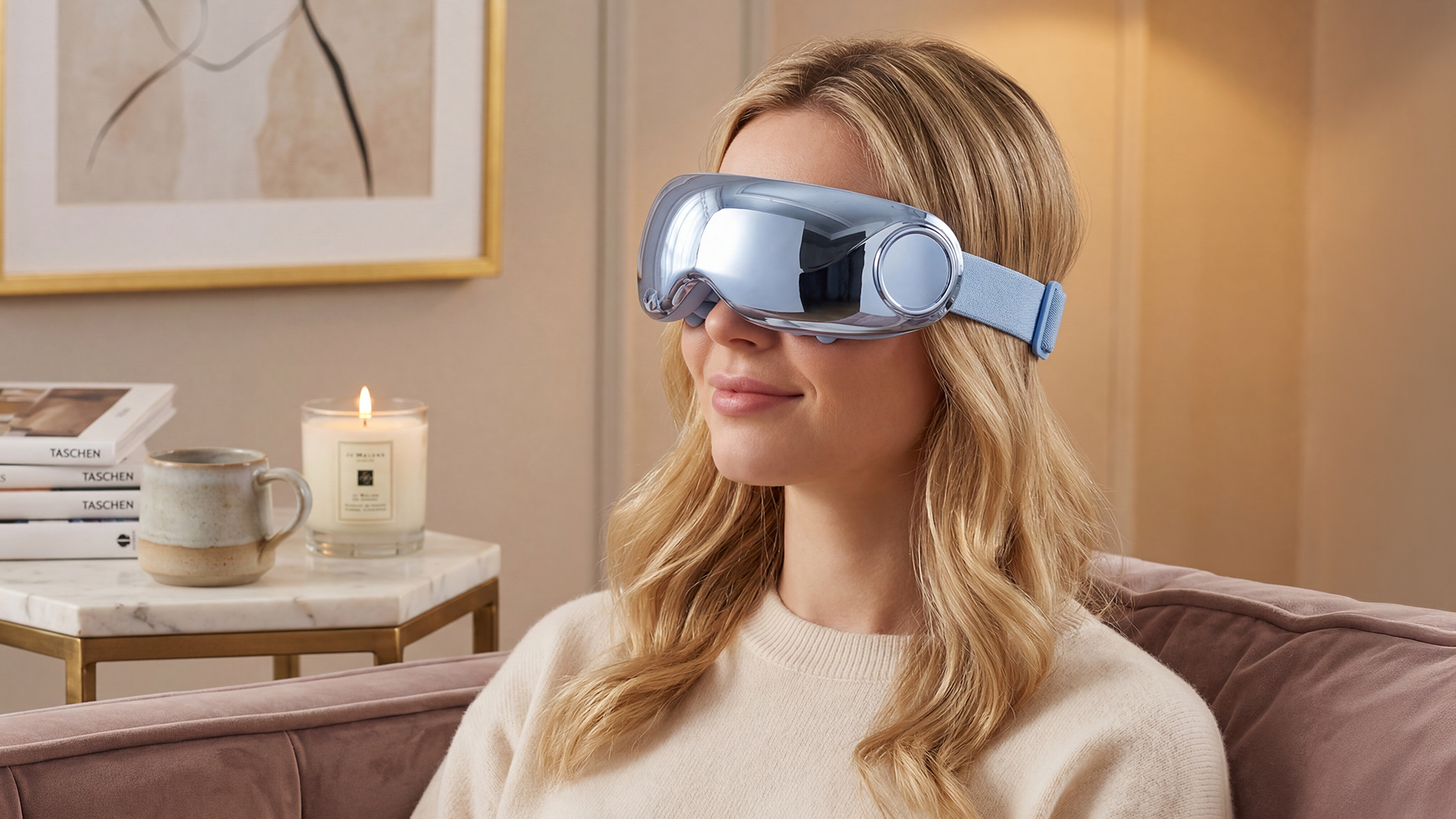
How Timed Air Cycles Replace Constant Squeeze
Anyone who has sat in front of a monitor all afternoon knows how heavy the area around the eyes can feel by evening. Inside a modern eye massager, rhythmic air inflation addresses that tension by moving air in controlled waves instead of holding one unchanging squeeze. Soft internal pockets fill up, pause for a moment, and release on a set schedule, creating a gentle ebb and flow rather than flat pressure.
Mechanical rollers or simple vibration motors behave differently. Rollers can feel sharp or point-heavy along delicate facial bones, while vibration alone mostly buzzes on the surface without shifting deeper muscle tension. Timed air chambers spread force across a broader surface area and step down regularly, which helps the face relax without feeling trapped under a rigid clamp.
Inside the Pump, Valves, and Air Chambers
Behind the soft fabric lining sits a compact pneumatic system that relies on tight coordination between hardware and firmware. Even though the outside looks sleek and quiet, several parts work in sequence every few seconds to shape the feel of each cycle.
A compact air pump draws in ambient air and builds gentle air pressure inside the feed line.
Miniature valves open or close to direct airflow into specific air bladders or release air back out.
A pressure sensor monitors internal air pressure continuously so inflation stays within safe, comfortable limits.
Soft air bladders positioned near the brow, temples, and outer eye area expand as air enters.
A typical cycle starts when a valve opens to feed one or more air bladders while a pressure sensor tracks how fast the reading climbs. Once the target air pressure is reached, the controller may hold the air briefly to apply a steady press, then open a vent path so the pockets soften. Repeating that rise, hold, and release pattern keeps the sensation dynamic from start to finish.
Air bladders also need clean heat seals and flexible materials so they expand evenly without ballooning into one corner. When a pressure sensor works with closed-loop control, the board can react to small shifts in internal volume, keeping peak air pressure steady even as soft padding compresses slightly against the face.
Why Wave Patterns Beat Static Pressure
Product engineers tuning comfort often compare alternating air cycles against static pressure during sessions lasting ten to fifteen minutes. Human sensory receptors adapt quickly to constant stimulation, meaning a steady squeeze can quickly feel monotonous or overly tight. Alternating waves introduce subtle changes in force that match how people naturally unwind.
Many eye massager designs pair rhythmic air inflation with adjustable pressure levels or warm compress zones so users can pick a softer evening pace or a firmer post-screen routine. Balancing air volume, cycle duration, and quiet valve action takes careful calibration so comfort stays steady across the entire session.
| Aspect | Rhythmic Air Inflation | Static Constant Pressure |
| Pressure Behavior | Alternating fill, hold, and release waves | Steady hold at one pressure level |
| Muscle Recovery | Brief drops between cycles ease tension | Limited relief until the session ends |
| Contour Adaptability | Adjusts timing across brow and temples | Can press hard on sensitive spots |
| Acoustic Character | Light pump and valve shifts during cycles | Continuous motor hum with fewer shifts |
| User Experience | Feels like guided pulsing or kneading | Feels like a fixed band on the head |
Choosing the right wave cadence involves real trade-offs. Faster cycling feels brisk and engaging, yet rapid valve switching can produce noticeable clicking sounds if acoustic damping is weak. Slower cycles sound quieter and feel calmer, though overly slow transitions may feel drawn out to someone who prefers a livelier rhythm.
Lessons From a Bench Test on Valve Timing
During a bench test on an eye massager assembly, engineers noticed that test participants reported a lingering tightness near the temples even after the upper brow chamber started letting air out. Air pressure logs from the test rig pointed straight to a timing mismatch. The temple air bladders had slightly longer or narrower exhaust paths, so air lingered inside the pockets while the next inflation step began.
Tuning the valve release windows in firmware and checking the internal tubing and weld seams resolved the uneven drop. Once the temple air bladders emptied cleanly on schedule, left and right air pressure felt balanced and predictable. In practice, small details like tube routing, fitting tightness, and valve response speed decide whether a pneumatic design feels smooth or jerky.
Checking valve response across multiple sample units also caught minor variations in seal seating before tooling was finalized. Catching small airflow bottlenecks early keeps assembly smooth and ensures the finished product matches its intended rhythm.
Standards, Real Limits, and Who Benefits Most
Reliable personal care devices align with established safety benchmarks such as IEC 60335-2-32 for electrical massage appliances, alongside broader ergonomic principles and published research on digital eye strain. Research on screen fatigue frequently points to reduced blinking, dryness, and focusing strain as key drivers of discomfort. Rhythmic air compression can help ease surface muscle tightness around the forehead and temples after long workdays, yet it is not a medical treatment for eye diseases, vision disorders, or underlying ocular conditions.
Honest boundaries matter just as much as technical features. Air pressure feels different from person to person depending on facial structure, skin sensitivity, and temple width, and an imperfect seal around the nose bridge can change how air distributes. No single setting suits every face shape, and over-tightening a strap can push pressure harder than intended. Anyone with recent eye surgery, acute eye pain, or sensitivity to facial pressure should consult a qualified eye care professional before using an eye massager.
For businesses developing or sourcing wellness products, Emoka, short for Xiamen Emoka Health Science & Technology Co., Ltd., brings practical manufacturing experience, disciplined quality control, and steady supply chain support to help translate pneumatic engineering into dependable production runs.