
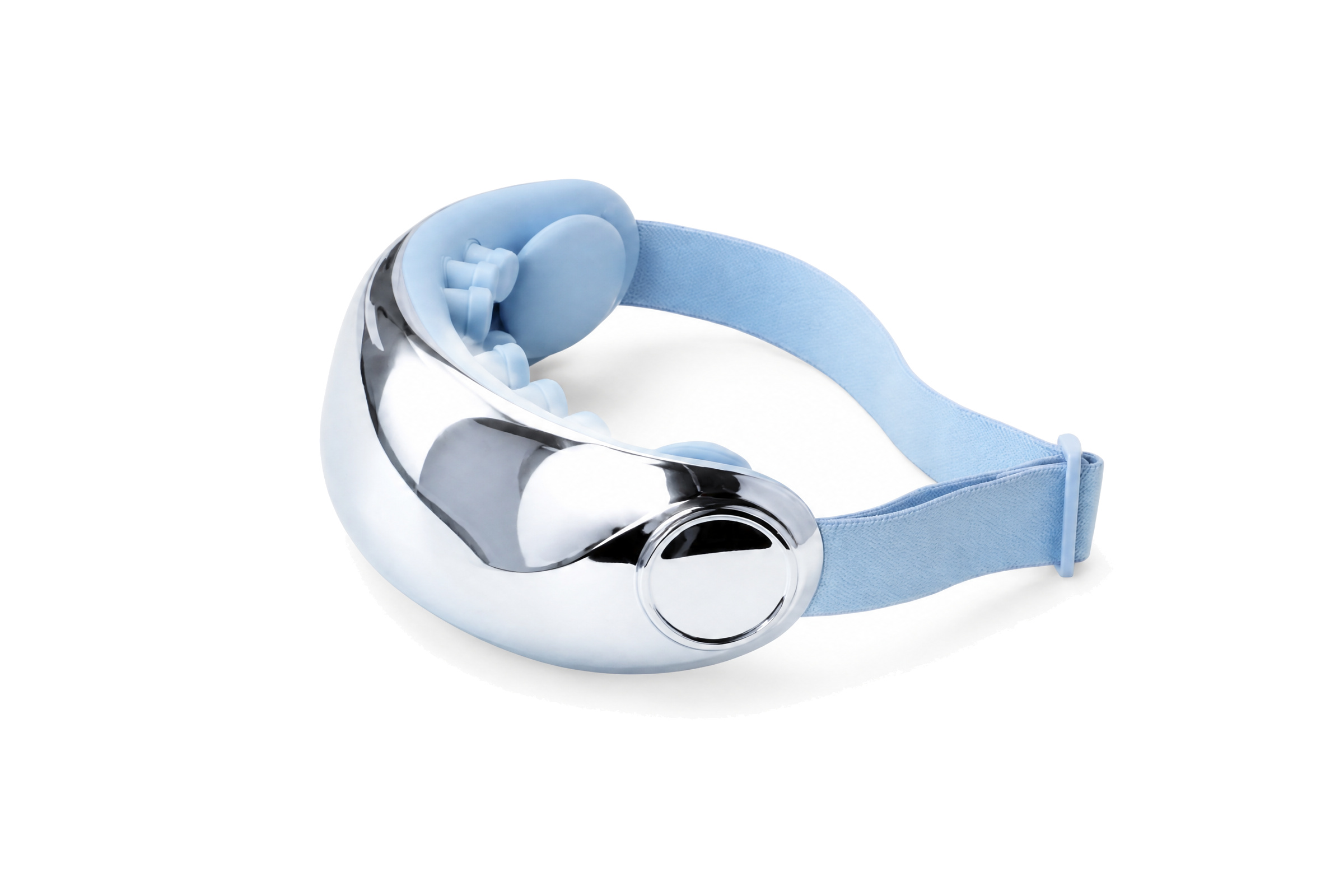
Closing the eyes cuts off visual input, which makes the brain noticeably more sensitive to surrounding sounds. In a quiet bedroom or a shared office break room, the soft whir of an air pump or a tiny gear motor can easily pull attention right back to the hardware sitting on the face. Adding a smart Bluetooth eye massager with gentle melody options shifts the sensory focus away from mechanical operation and toward calm background sound.
Sound does more than mask faint motor noise. Steady, low-tempo audio gives a restless mind a predictable anchor after hours of reading messages, reviewing spreadsheets, or staring at bright displays. When soft acoustic tracks run alongside mild warmth and rhythmic air compression, the session feels cohesive rather than purely mechanical.
Inside the Wireless Audio and Control Architecture
Fitting clean wireless sound inside a compact wearable frame requires careful layout around heat zones, air bladders, and battery cells. Inside the housing, a low-power Bluetooth module handles pairing with a phone or tablet while an onboard audio decoder feeds compact acoustic drivers positioned near the temples.
A Bluetooth Low Energy or dual-mode audio chip establishes a stable wireless link and remembers previously paired phones for quick reconnection.
Small full-range micro speakers sit inside tuned acoustic cavities on either side of the frame so sound stays personal without blaring into the room.
Built-in flash memory stores preloaded nature tracks or soft piano loops, allowing immediate playback even when no phone is connected.
Dedicated control firmware coordinates volume steps, voice prompt levels, and automatic shutoff timers alongside massage modes.
Keeping audio clear at low listening levels is harder than pushing high volume. Engineers usually shape the frequency curve so soft mid-range tones come through cleanly without harsh treble hiss, while keeping speaker enclosures isolated from vibrating air chambers.
Built-In Tracks vs. Custom Bluetooth Streaming
Users tend to split between wanting zero-setup relaxation and wanting full control over their own playlists. Comparing onboard audio playback against live Bluetooth streaming highlights why many current eye massager designs support both modes instead of forcing a single habit.
| Feature Area | Preloaded Gentle Melody | Wireless Bluetooth Streaming |
| Startup Speed | Plays immediately with one button press | Requires phone pairing or auto-reconnect |
| Phone Dependency | Works completely offline without a screen | Uses a smartphone, tablet, or laptop |
| Audio Variety | Fixed library of calm loops or nature sounds | Unlimited access to personal music or podcasts |
| Battery Draw | Slightly lower power demand during sessions | Modest extra draw from active wireless radio |
| Distraction Risk | Zero notifications or incoming alert chimes | Can pass phone alerts unless silenced |
Having both choices solves a common everyday friction point. Someone winding down before sleep may prefer built-in gentle melody loops so the phone stays across the room, while a frequent traveler on a flight might stream a familiar ambient playlist directly from a mobile device.
Acoustic Tuning Lessons From Prototype Testing
During pre-production acoustic testing on a folding eye massager frame, engineers noticed a subtle buzz whenever soft piano notes played at the same time the air pump reached peak inflation. At first, the team suspected speaker distortion, yet swapping drivers made no difference. Closer inspection showed that the thin plastic speaker housing shared a mounting rib with the pneumatic manifold, letting low-frequency pump vibration travel straight into the ear-side shell.
Adding a soft silicone isolation ring around each speaker cup and slightly adjusting the PWM drive frequency of the pump eliminated the resonance. Once the mechanical path was decoupled, the gentle melody stayed clean even during full air compression cycles. In wearable hardware, small structural separation choices often matter more than upgrading raw audio specs.
Testing multiple units across different head widths also revealed that hinge tension affects perceived volume. If the side arms flare slightly on a wider face, acoustic vents need careful placement so sound still reaches the ear cleanly without forcing the user to crank volume up.
Safety Benchmarks, Acoustic Limits, and Practical Boundaries
Well-built personal wellness electronics follow recognized safety frameworks such as IEC 60335-2-32 for electrical massage appliances alongside Bluetooth SIG wireless compliance and regional radio standards like FCC Part 15. On the acoustic side, keeping maximum output within conservative personal listening levels aligns with World Health Organization guidance on safe sound exposure, which emphasizes lower volume over prolonged sessions.
Honest expectations remain essential. A smart Bluetooth eye massager with gentle melody can help create a calmer environment for easing everyday forehead and temple tension after screen-heavy routines, yet it is not a medical device and cannot diagnose, treat, or cure sleep disorders, migraines, or ocular conditions. Sound leakage is also a real physical trade-off because open-ear micro speakers sit near the temples rather than sealing inside the ear canal, meaning people sitting right next to the user in a silent room may still hear faint audio at higher volume settings. Anyone with recent eye surgery, ear sensitivity, or acute facial discomfort should check with a qualified healthcare professional before use.
For brands and buyers sourcing connected personal care devices, Emoka, short for Xiamen Emoka Health Science & Technology Co., Ltd., offers established manufacturing capability, structured quality assurance, and reliable supply chain coordination to bring balanced acoustic and pneumatic designs into consistent production.